Blog
God’s Will
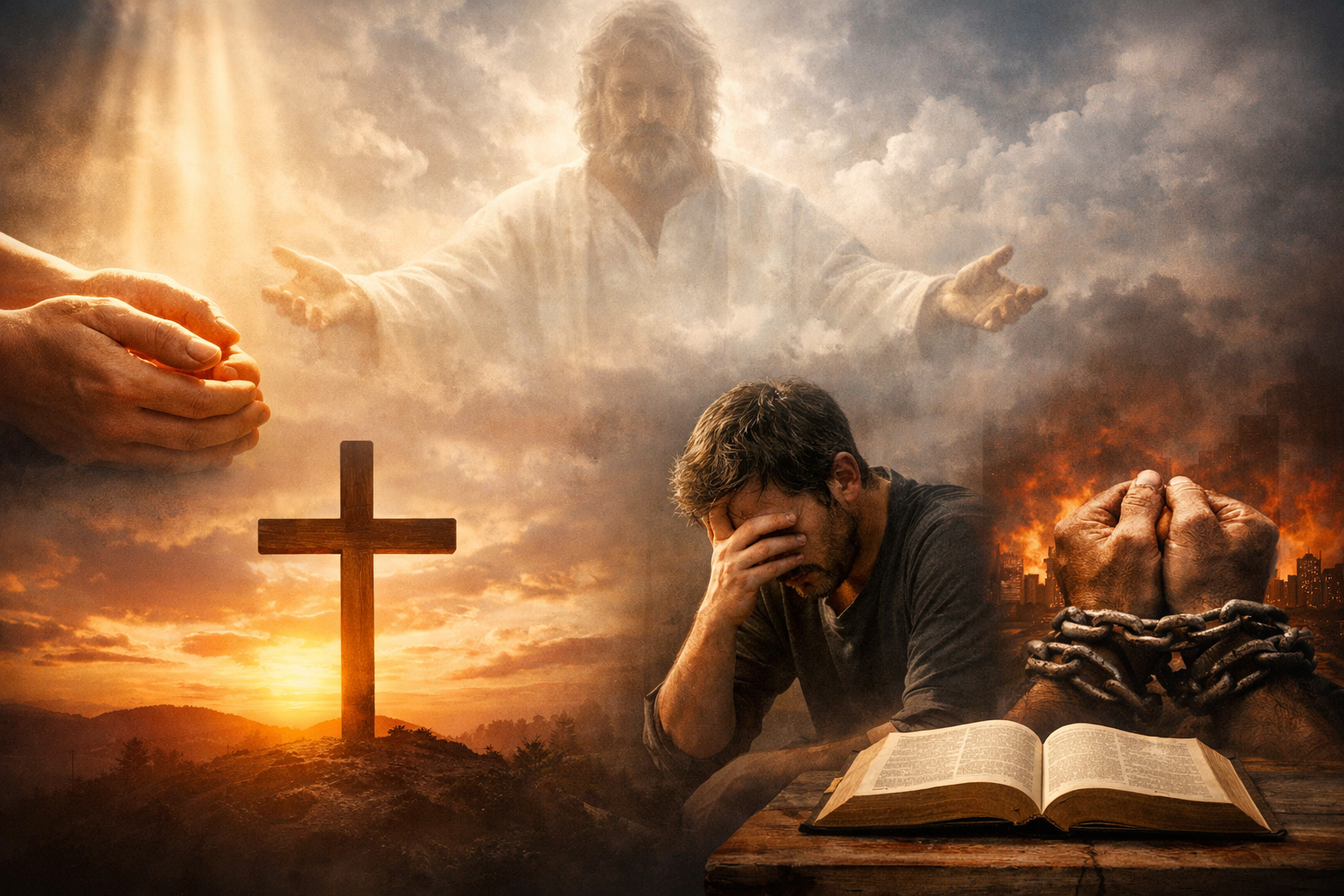
GOD'S WILL - SUFFERING and HEALING
The Bible says all of these things at once:
God heals
God allows suffering
God commands holiness
People sin
God is sovereign over everything
This presents major questions on how all of this can fit together and not be contradictory.

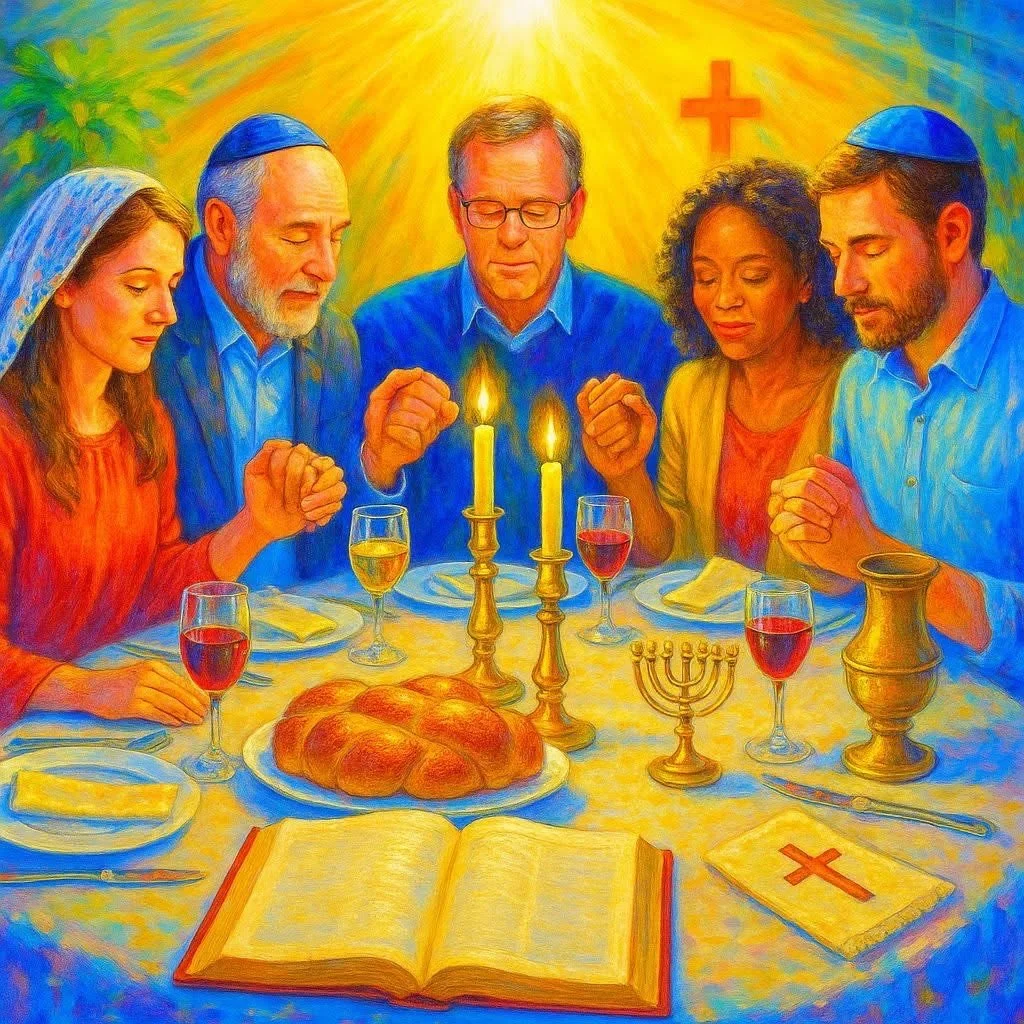
WHAT IS MESSIANIC JUDAISM ?? WHAT IS A MESSIANIC GENTILE ??
I have only been studying Messianic Judaism for a few weeks and I'm very new to their teachings, so my conclusions may not be exactly correct. I just want to present some things I've learned
DEFINITION AND IDENTITY
Messianic Judaism could be considered a sect of Christianity and also a sect of Judaism. They see Jesus of Nazareth as the Jewish Messiah and the Son of God in the same way that mainstream Christianity does, and they are committed followers of Jesus.
It's important to note that a Messianic Jew is different from a Jewish Christian. Just because a Jewish person commits to following Jesus Christ does not make them a part of the Messianic Jewish movement.
HISTORICAL BACKGROUND
It seems the Messianic Jewish movement began to come together around the '60s and has now become a flourishing sanctuary for Jewish people to become followers of Jesus and feel comfortable keeping their identity of being Jewish. The Messianic Jewish movement can trace its roots all the way back to 1946, in which a group of Jewish believers in Jesus began to light candles on the Sabbath and keep Shabbat in the land of Israel.
CURRENT GROWTH AND SCHOLARSHIP
The Messianic Jewish movement now has gained lots of momentum within the Christian communities and Jewish communities and has developed quite a plentiful scholarly community in time. More and more scholars are taking a liking and applying their work to Messianic Judaism. And it is being recognized with valuable contributions to the academic community.
BARRIERS BETWEEN TRADITIONS
You see, the Christian community makes it very hard on Jews to become believers in Jesus because modern Christianity is so different from Jewish tradition. For example, Christian tradition worships on Sundays; Jewish tradition worships on Saturdays (the Shabbat). Christian churches don't serve kosher food. Christian tradition and Jewish tradition celebrate different holy holidays. Traditional Jews keep the Shabbat and Torah while Gentile Christians do not.
Therefore, mainstream Christianity presents quite a bit of hurdles and difficulties for a Jewish believer to keep their Jewish identity without becoming "uncircumcised" while becoming a follower of Jesus.
PAUL'S TEACHING ON JEWISH AND GENTILE IDENTITY
This goes against Apostle Paul's standard that he preached in all of the early churches—that Jews should remain Jewish and Gentiles should remain Gentile.
1 Corinthians 7:17–20 TLV
[17] Only, as the Lord has assigned to each one, as God has called each, let him walk in this way. I give this rule in all of Messiah’s communities. [18] Was anyone called when he already had been circumcised? Let him not make himself uncircumcised. Has anyone been called while uncircumcised? Let him not allow himself to be circumcised. [19] Circumcision is nothing and uncircumcision is nothing—but keeping God’s commandments matters. [20] Let each one remain in the calling in which he was called.
THE JERUSALEM COUNCIL
I will also note that the Jerusalem Council in Acts 15 and reiterated in Acts 21 ruled that Jewish believers are to continue to keep the Torah, while Gentile believers are not expected to. Gentiles have no need to keep the parts of Torah directed for Jews or become circumcised or follow any other Jewish tradition.
UNIFIED FAITH IN ONE MESSIAH
It seems the Bible presents the story that when Jesus Christ came as the Jewish Messiah, Judaism was supposed to continue as a religion but embrace their Jewish Messiah, and also Gentiles could follow this Jewish Messiah and did not have to convert to Judaism.
Ephesians 2:11–16 TLV
[11] Therefore, keep in mind that once you—Gentiles in the flesh—were called “uncircumcision” by those called “circumcision” (which is performed on flesh by hand). [12] At that time you were separate from Messiah, excluded from the commonwealth of Israel and strangers to the covenants of promise, having no hope and without God in the world. [13] But now in Messiah Yeshua, you who once were far off have been brought near by the blood of the Messiah. [14] For He is our shalom, the One who made the two into one and broke down the middle wall of separation. Within His flesh He made powerless the hostility— [15] the law code of mitzvot contained in regulations. He did this in order to create within Himself one new man from the two groups, making shalom, [16] and to reconcile both to God in one body through the cross—by which He put the hostility to death.
So there was never supposed to be two separate religions of Judaism and Christianity. They were supposed to be one religion that follows one Messiah.
THE PARTING OF THE WAYS
But there were many issues in the early church because of the differences between Jewish believers and Gentile believers. The differences were so strong that instead of staying together in love for one another, they eventually ended up parting ways. Scholars call this "the parting of the ways," which is the separation of Gentile believers and Jewish believers over several centuries.
By the 4th and 5th centuries, the believers in the Jewish Messiah became predominantly Gentile and took a different direction in ecclesiology. Some of those examples easily visible are the two main Christian holidays became the birth of Jesus and the resurrection of Jesus, known as Christmas and Easter. And the weekly day for Christian worship became celebrated on the day of the Resurrection—Sundays. This being different than the Jewish feast days and Shabbat.
WHAT MESSIANIC JUDAISM SEEKS TO RESTORE
Messianic Judaism is a movement that attempts to join together Jews and Gentiles as followers of Jesus in the way that they were first together in the early church when it started in the first century.
Jewish believers that identify with the Messianic Jewish movement would be called Messianic Jews, and Gentile believers that identify with the Messianic Jewish movement would be called Messianic Gentiles.
Their weekly services of worship take place in a synagogue with a rabbi and look much more like a Jewish synagogue service than a traditional Christian service.
KEY BELIEFS OF THE MESSIANIC JEWISH MOVEMENT
1. They believe Jews should continue to keep Shabbat and as much of the Torah as they possibly can today.
2. They believe Gentiles should not be responsible for keeping the Torah or the Shabbat. But Gentiles are encouraged to come alongside the Jews and express themselves in Torah observance as much as they would like to. But there is no pressure for Gentiles to observe Torah.
3. They believe in a future Messianic Kingdom. They believe the Kingdom of Heaven is a future Kingdom in which Christ will return to restore Israel and reign over the entire Earth over all nations with peace, justice, and prosperity for eternity. This would be called a pre-millennial eschatology in Christian theology.
4. They believe in the ongoing election of Israel.
5. They agree with the majority of mainstream Christian doctrine such as the Trinity and early Church creeds. But they are not as much creed-driven as mainstream Christians. They see a life of faith somewhat more important to be lived out and practiced than an adherence to a system of creeds or beliefs. A lot of their theology is still being worked out by scholars.
6. They agree with the majority of mainstream Christian doctrines such as the resurrection of the dead and the Day of Judgment, etc.
7. They see the Christian Old Testament and New Testament as divinely inspired by God in the same way Christians do.
FINAL NOTE
I've never attended a Messianic Jewish synagogue and I purposely have never looked up any documentation that lays out their core beliefs. I've just immersed myself in their writings and teachings for a few weeks, and it has been so enriching to my faith!
Much love!
MY TESTIMONY OF LEARNING TO LEAD PEOPLE TO CHRIST
MY TESTIMONY OF LEARNING TO LEAD PEOPLE TO CHRIST
MY ENCOUNTER WITH GOD
Fourteen years ago in August 2011, I encountered the Lord through a supernatural experience at a church I was invited to. Over the next few weeks, I surrendered my life to Christ, was baptized in the Holy Spirit with the evidence of speaking in tongues, and was delivered from chronic suicidal depression, drug addiction, and hypothyroidism.
I began witnessing to all my friends and family, telling them how I had been transformed. I wanted to lead people to Christ, but I didn’t really know how. Someone told me that I needed to learn the "Romans Road."
A DIVINE ANSWER TO PRAYER
So I prayed and said, “God, I don’t know what the Romans Road is. Can you please teach me?” The very next day, I went out to get the mail, and there was a pamphlet on our porch titled Roman's Road.
It was a tract that talked about Jesus and explained the path to salvation using key scriptures from the book of Romans. Someone evangelizing must have gone through the whole block and placed these pamphlets on our doorsteps just the very next day after my prayer!
UNDERSTANDING THE ROMAN'S ROAD
I found out the Romans Road was a pathway through the book of Romans that highlighted important scriptures explaining how we have all sinned, are separated from God, and need faith in Jesus Christ for salvation.
I immediately began using these scriptures, and at the end, I would lead people in a prayer of salvation and tell them they were now saved.
DOUBTS BEGIN TO SURFACE
After many years of attending church, reading my Bible, and going to Bible school, I began to question the Roman's Road and the salvation prayer model. I realized it placed a heavy emphasis on faith but left out several key elements such as being filled with the Holy Spirit, obedience to God, water baptism, and other necessary aspects of following Christ.
But I didn’t know any other way to lead people to Christ, so I continued to use it for years.
BECOMING AN EVANGELIST
In 2019, I left my role as an associate pastor and became a traveling evangelist doing tent revivals and church meetings. I would give altar calls, have people come forward, lead them in a prayer of salvation, and tell them they were saved.
CONVICTION AND TRANSFORMATION
After doing this for a while, I became very convicted. I knew in my heart it was wrong because people weren’t truly being transformed. They would say the prayer and often have emotional experiences like crying & trembling but they remained bound in sin.
So I stopped doing the salvation prayer. The joke became that I was the only evangelist who preached but didn’t lead people to Christ...lol
A CRISIS POINT
I began leaving people hanging at the end of the service because I knew the Romans Road salvation prayer was wrong, but I didn’t know what else to do.
In 2020, I was on a preaching tour in Pakistan. The hosting pastor told me I needed to give people an opportunity to come to Christ because they didn’t know what to do after I finished speaking. Not knowing a better way, I went back to using the salvation prayer.
I felt bad doing it, knowing in my heart it wasn’t the full picture, but I had no better alternative.
A NEW REVELATION
Finally, in the summer of 2020, someone introduced me to a different way of converting people to follow Christ. They pointed me to Acts 2:36–38:
Acts 2:37–38 NLT
“[37] Peter’s words pierced their hearts, and they said to him and to the other apostles, ‘Brothers, what should we do?’ [38] Peter replied, ‘Each of you must repent of your sins and turn to God, and be baptized in the name of Jesus Christ for the forgiveness of your sins. Then you will receive the gift of the Holy Spirit.’”
They showed me several examples in the book of Acts where, in the early church, people were led to Christ through repentance, water baptism, and receiving the Holy Spirit.
NO BIBLICAL SALVATION PRAYER
They explained that in the Bible, you won’t find a salvation prayer, catechism, confirmation, or church membership as the method to lead someone to Christ. What you do see is a consistent model: repentance, water baptism, and receiving the Holy Spirit, followed by a life of ongoing obedience and faith.
THE JOURNEY OF REVELATION
Many people might have stopped at the Roman's Road pamphlet on the porch, believing that was the end of the story. Of course, that was a sign from God but if we stay humble, God will continue to teach us more & more!
Revelation is a journey. It doesn’t come all at once. It took me 10 years to truly begin learning how to lead people to Christ, and I’m still learning.
I’d be a fool to say I now have the perfect way because I understand that my journey is not finished.
A BALANCED VIEW
I want to be clear, I do not condemn the salvation prayer. God can still use it powerfully because many people don’t know anything else. What matters is the purity of heart and sincerity. God looks at the heart and integrity.
I have close friends who came to Christ through a salvation prayer and had powerful, life-changing experiences. But they also went on to experience true repentance, water baptism, and the infilling of the Holy Spirit later on.
FALSE GOSPEL OR INCOMPLETE GOSPEL?
Some people call the Romans Road a “false gospel” because it leaves out important elements. I dislike how often that term is thrown around. A false gospel leads people away from the true Christ. There’s a big difference between a false gospel and an incomplete gospel. I think in some sense all of us have an incomplete gospel and we're always growing.
That's why it's okay to start where you're at and do what you know and let's all continue to grow together!
THE BOOK OF ROMANS IN CONTEXT
I’ll conclude with a final note about the book of Romans. The salvation prayer is based on Romans 10:9–10. But here’s the problem, any text taken out of context becomes a pretext.
Romans has 16 chapters, not just chapter 10. To understand Romans 10, we need to read everything leading up to it.
Chapters 1–3: Repentance
Chapters 4–5: Faith
Chapters 6–7: Water Baptism
Chapter 8: The Holy Spirit
Chapter 9: The Restoration of Israel and the Kingdom of God
So yes, Romans 10 tells us confession in Christ leads to salvation but what does that confession include? It includes:
Repentance
Faith
Water Baptism
The Holy Spirit
Understanding of Israel and the Kingdom of God
FINAL THOUGHTS
When God speaks, let's not finish His sentence for Him & think He's done talking. Let us use what He gave us to the best of our ability and continue to seek Him for more. We're all still learning, and that’s okay. Let’s keep growing together, staying humble, and pursuing the fullness of the gospel with sincerity and truth.

Beyond Revival
If your Christian Life gravitates around big evangelistic meetings, big conferences, or big weekly one-time Sunday morning church events, then something is off. Don't stop going to them or hosting them, but please take them off the center stage and the idol we've made them. Put them in their place of balance.
I want to encourage you to get into a small group Bible Study. Get into some small prayer meetings, do some outreach to the community in small teams. Meet in each other's homes and pray together. Do the Lord's Supper at your dining room table with brothers & sisters. Begin to do the things that are going to sustain you day in and day out because the "Big Show" always ends at Noon, then it's time to clean up.

Imitating the Acts Church: Do We Really Want it?
Many Christians express a desire to “return to the Acts church”, yearning for the profound community, spiritual power, and unity depicted in Acts 2:42-47. However, do we truly grasp what this entails?





Biblicism Fallacy
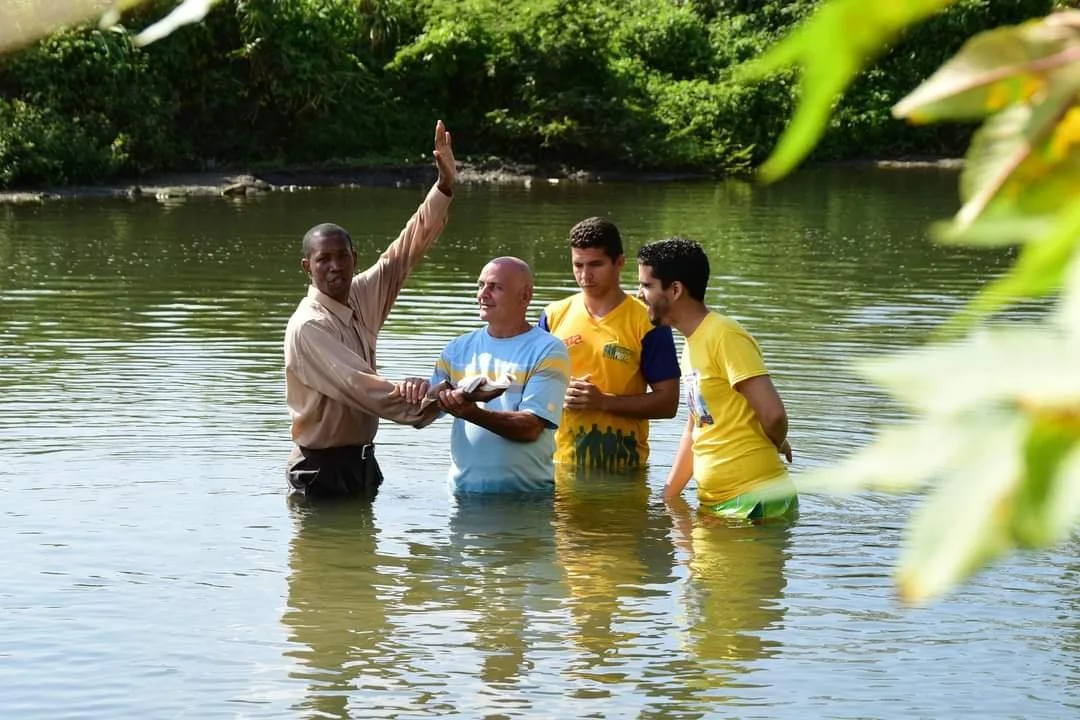
The Biblicism Fallacy is the mistaken belief that the Bible alone, without the aid of historical, cultural, or linguistic context, and apart from communal interpretation, provides a self-sufficient, clear, and unambiguous understanding of all theological truths. It assumes that a “plain reading” of Scripture is both the simplest and most accurate approach, neglecting the complexity of ancient texts.

A Short Summation of the History of Church Structure
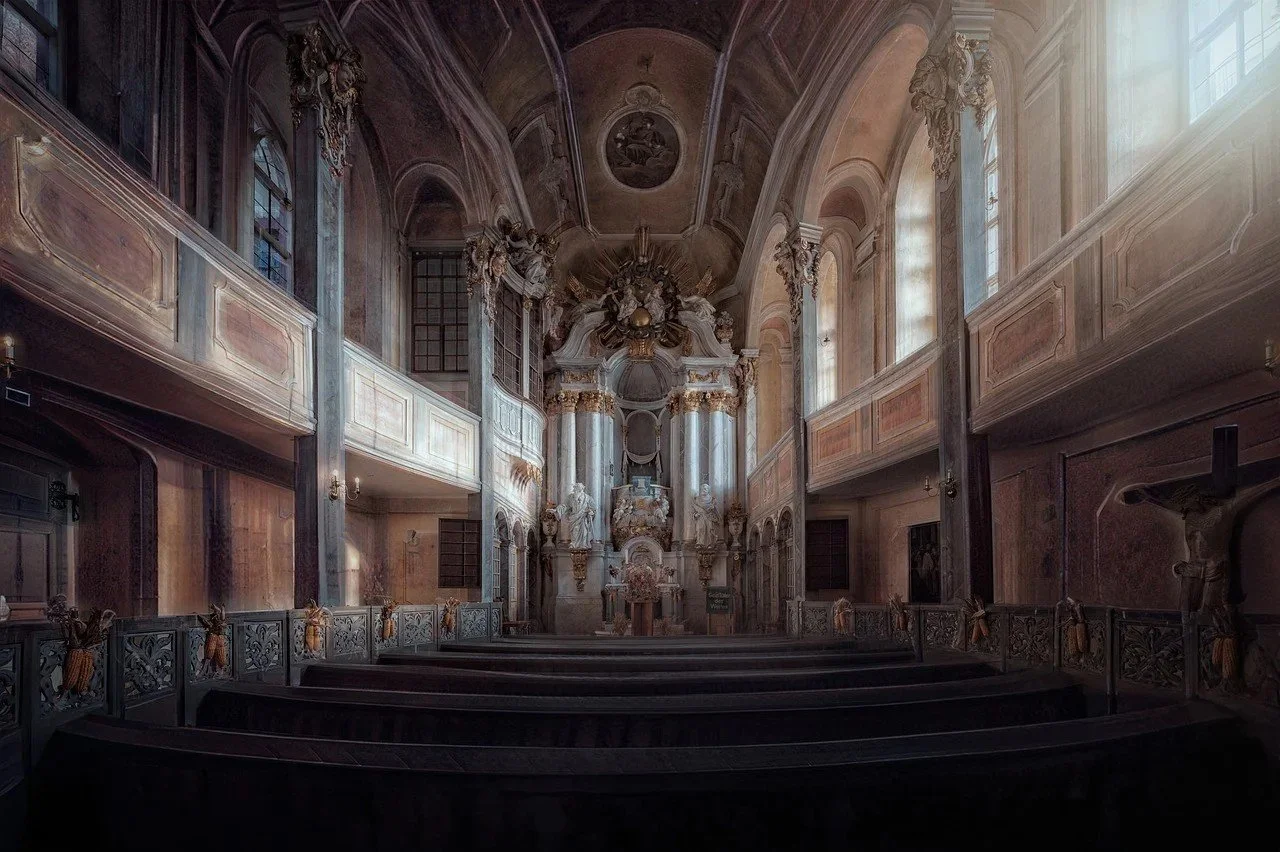
A Short Summation of the History of Church Structure
How did the modern church become so different from the early church we read about in the Book of Acts?
What keeps believers from falling away?
The Christian faith needs to be anchored into physical reality. It needs anchored into people, places and things that have real substance.